
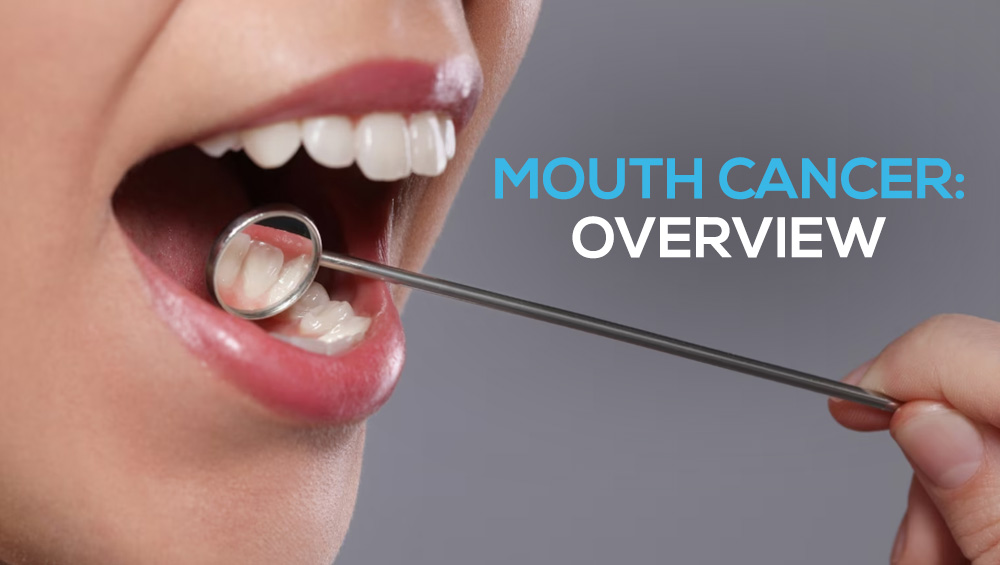
Mouth cancer is a type of head and neck cancer that begins on the lips or in the mouth. It the most
common cancer affecting males in India, with nearly half of all cancers being diagnosed are Oral
Cancers.
Warning Signs of Oral Cancer Includes:
• A non-healing sore/ulcer in the mouth
• A white and/or red patch on the gums, tongue, or cheeks
• Unusual oral bleeding
• Recent change in fitting of dentures
Prognosis of Mouth Cancer
Prognosis of oral cancers is very good if detected and treated early. It is treated with surgery alone
or in combination with radiation and chemotherapy.
Common Areas Where Mouth Cancer Develops
The most common areas in the mouth where cancer develops are:
• Tongue
• Buccal mucosa
• Palate
What You Need to Know About Mouth Cancer
• Mouth cancer surgery is best performed by surgeons who are trained exclusively in head and neck
surgery.
• Tobacco, pan masala, gutkha and alcohol use are major risk factors for mouth cancer in India.
• To provide the best outcomes and quality of life, reconstructive surgery is often done along with
tumour removal surgery. A specialised team of plastic surgeons work together with the head and
neck surgeon to provide this.
Mouth Cancer Diagnosis
Diagnosis of mouth cancer is done by head and neck surgeon along with specialised care team.
A detailed description and history of onset symptoms, tobacco usage, past history of other illness is
noted by the care team. After this for confirmation of malignancy, biopsy is taken.
Oral Biopsy
During the biopsy, a small amount of abnormal tissue is taken from the suspicious area. This is then
examined by a pathologist under a microscope, to confirm the diagnosis.
Does Biopsy Lead to Spread of Mouth Cancer?
It is a misbelief among society that biopsy leads to increase in cancer growth. This has been
disproved many times in various studies.
Imaging for Oral Cancer
After biopsy confirms the cancer, various imaging tests such as:
• PET-CT SCAN
• MRI
• CT SCAN
• X-RAY
• OPG
are done to know more details about the tumour. This also gives us and idea of spread of
the cancer.
Latest Genomic Testing for Mouth Cancer
Genomic testing is also called tumour sequencing or molecular profiling. This is done to see the
genes that are misplaced leading to cancer development.
Types of Mouth Cancer
1. As per type –
• Squamous cell carcinoma – More than 90 percent of mouth cancers are squamous cell
carcinoma.
• Oral Verrucous Carcinoma – Rare subtype of squamous cell carcinoma
• Oral Melanoma (pigment containing tumour cells)
• Oral MALToma (mucosa associated lymphoid tissue)
2. As per site –
• Buccal Mucosa Cancer (Inner Cheek Cancer)
• Tongue Cancer
• Floor of Mouth Cancer
• Gum Cancer
• Lip cancer
Staging of Mouth Cancer
(American Joint Committee on Cancer, AJCC)
Stage 0
Stage 0 is also called carcinoma in situ. It does not spread to other parts of the body.
Stage I (1)
Stage I describes a very early stage of cancer.
Tumour size is upto2 cm and has not spread to regional lymph nodes or other organs.
Stage II (2) Mouth Cancer
Stage II tumour has a size of 2-4 centimetres.
Stage II cancer has not spread to regional lymph nodes or other organs.
Stage III (3) Mouth Cancer
Stage III mouth cancer describes cancer that either is larger than 4 centimetres or has spread to a
lymph node in the neck.
Stage IV (4) Mouth Cancer
Stage IV is the locally advanced stage of mouth cancer. It may be any size, but it has spread to:
• Nearby tissue, such as the jawbone or other parts of the oral cavity
• The neck lymph nodes
• Distant parts of the body
Stage III and stage IV cancers are more likely to recur.
Mouth Cancer Surgery
Surgery is the main treatment for most people with mouth cancer. With the latest techniques,
tumours of the mouth can be removed orally without giving any cut on the face.
If the lymph nodes are involved in the neck, they can be removed through a latest cosmetically
better incision as compared to conventional techniques.
Those who desire even better cosmetic result in the neck, they can opt for ROBOTIC NECK
DISSECTION. This entails entering through the armpit in a hidden incision and removed the neck
lymph nodes.
Different Types of Specialised Surgeries for Mouth (Oral) Cancer
• Glossectomy
• Mandibulectomy
• Maxillectomy
• Oral composite resection
• Buccal mucosa wide excision
• Lip wide excision
• Palate wide excision
• Infratemporal Fossa Clearance
• Lymph Node Removal during Mouth Cancer Surgery (NECK DISSECTION)
• Reconstructive Surgery for Mouth Cancer (FREE FLAP RECONSTRUCTION)
• Dental Implants
Recurrent Mouth Cancer
Mouth cancer that has been treated before completely but has returned is called recurrent mouth
cancer. With the latest techniques and advancements in surgery, radiation and chemotherapy, we
can recurrent mouth cancers also.
However, they carry a high risk of re-occurring. Discuss with head and neck exert in details about
treatment of recurrent oral cancer.
Request an Appointment
Request an Appointment to discuss personalised cancer care.
Whatsapp: +91-8527866560